


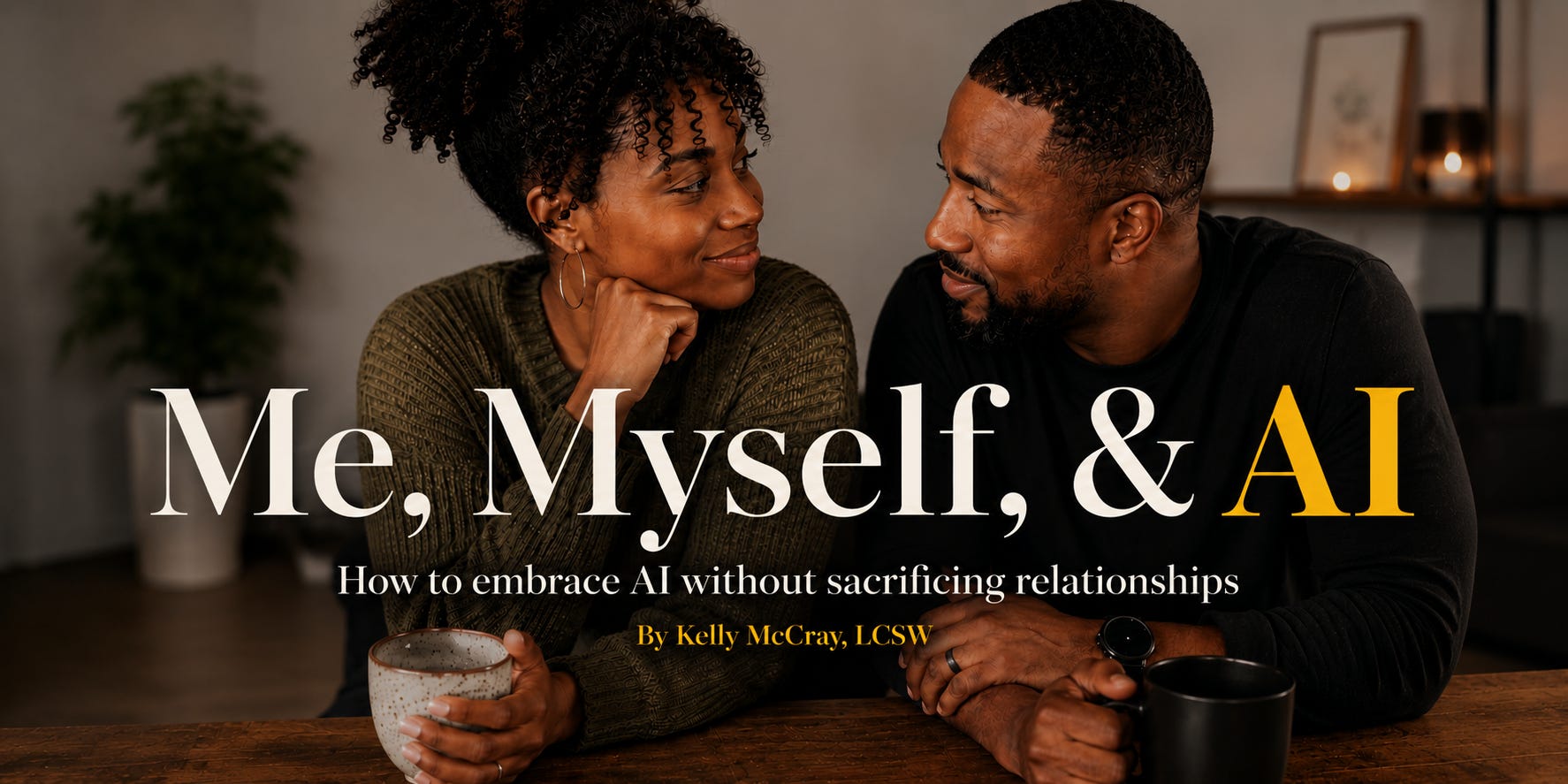
A few weeks ago, my husband and I were sitting in the living room discussing a decision that has become increasingly familiar to military families: where we might want to live next and how our choices today could shape our family years from now. Somewhere in the middle of the conversation, one of us casually referenced something ChatGPT had suggested. Neither of us paused. The comment landed as naturally as citing an article, mentioning a podcast, or recalling advice from a friend.
What struck me later wasn’t that artificial intelligence had entered the conversation. It was that its presence felt entirely normal.
The truth is that AI has become a quiet companion in many of our household discussions. Sometimes it helps us think through financial decisions. Sometimes it helps us compare potential duty stations or explore career options. Occasionally it serves as a sounding board when one of us is wrestling with a difficult workplace situation. More often than not, an interaction with AI becomes the starting point for a deeper conversation between the two of us.
As a psychotherapist, I find that reality fascinating. As someone with ADHD, I find it entirely unsurprising.
People often discuss AI as though it were simply another technological tool, but that description feels increasingly incomplete. AI is not merely helping us access information; it is changing the way many of us think, process, create, and make decisions. For some, it is becoming a conversation partner. For others, it is becoming a coach, a brainstorming companion, or a source of emotional support.
That reality raises important questions, particularly for those of us who care deeply about relationships, faith, and human flourishing. Not because AI is inherently dangerous, but because every technology changes us in some way. The question is not whether artificial intelligence will shape our lives. It already is. The question is whether we are paying attention to how.
For me, part of the appeal is neurological.
Living with ADHD often means living with a mind that moves faster than conversations can keep up. Ideas arrive in clusters. Questions generate more questions. Decisions branch into dozens of possible outcomes before the first thought is fully formed. For years I assumed everyone experienced this constant mental activity until I realized that many people do not spend quite so much time chasing multiple trains of thought simultaneously.
AI happens to be remarkably well suited for a brain like mine.
It responds immediately. It tolerates endless curiosity. It never seems annoyed by follow-up questions. I can ask it to compare doctoral programs, explain a theological concept, summarize research, brainstorm a business idea, and help me organize my thoughts before a difficult conversation…all within the span of fifteen minutes.
From a neuroscience perspective, that responsiveness matters. Human brains are designed to pay attention to rewards, and immediate rewards are particularly powerful. Every time we receive useful information, solve a problem, or gain clarity, neural pathways associated with learning and reinforcement become active. In other words, our brains naturally gravitate toward experiences that provide quick feedback.
AI provides feedback almost instantly.
By contrast, many of the things that contribute most significantly to our growth do not.
Marriage is rarely instantaneous. Friendship certainly isn’t. Prayer often feels anything but efficient. The wisdom we gain from Scripture, community, and lived experience typically unfolds over months and years rather than seconds.
I wonder if that is partly why this moment requires such intentionality.
One of the great temptations of modern life is confusing efficiency with flourishing.
We assume that because something is faster, it must also be better. Yet the most meaningful aspects of human existence have always resisted optimization. You cannot automate trust. You cannot accelerate intimacy. You cannot outsource spiritual formation.
The irony is that AI has actually highlighted this reality in my own life.
While it often helps me think more clearly, it also reminds me of what it cannot provide. It can organize information, but it cannot know me. It can generate empathy, but it cannot genuinely care. It can offer perspectives, but it cannot replace the wisdom that emerges when my husband and I wrestle through a difficult decision together. It can simulate conversation, but it cannot offer the presence of a trusted friend who sits with me in grief, disappointment, or uncertainty.
As a Christian, I have an additional lens through which to view this conversation. Scripture presents human beings not merely as thinkers but as relational creatures. We are created for communion with God and connection with one another. The deepest longings of the human heart are not ultimately informational; they are relational.
That distinction matters.
Technology can help us gather knowledge, but knowledge alone has never been the goal of the Christian life. The goal is transformation. It is becoming the kind of people who love God and love others well.
There is a subtle but important difference between using AI as a tool and allowing it to become a substitute for practices that were never meant to be replaced. When anxiety rises, it may be easier to open a chatbot than to call a friend. When uncertainty emerges, it may be tempting to seek an immediate answer rather than sit with God in prayer. When loneliness appears, it may feel more comfortable to engage with a system that never rejects us than to risk vulnerability with another person.
Yet the very friction we are tempted to avoid is often where growth occurs.
Prayer forms us precisely because it requires dependence. Relationships deepen precisely because they involve vulnerability. Community changes us precisely because other people challenge, encourage, disappoint, and refine us in ways technology never can.
Perhaps the challenge before us is not determining whether AI belongs in our lives. Like previous technological revolutions, its arrival is already reshaping the world around us. The challenge is learning how to embrace its benefits without allowing it to displace the relationships and practices that make us fully human.
I suspect my husband and I will continue referencing AI in our conversations for years to come. It will likely help us make decisions, explore ideas, and navigate the complexities of military life. In many ways, it already has.
But I hope it always remains what it was meant to be: a tool that supports wisdom rather than replacing it, a catalyst for connection rather than a substitute for it, and a reminder that while technology may continue to evolve, the deepest needs of the human heart remain remarkably unchanged.
We still need God. We still need one another. And no algorithm, no matter how sophisticated, can fulfill either role.
Our Daily Thread is a collaborative space. If you want to be a contributor, we would love to chat with you about it. Subscribe & send us an email at info@iamwellwoven.com!
