


I’ve been doing this long enough to know that routine saves lives.
Not just in the Army…at home too. When our first kid was born, we became almost obsessive about it. Bath time at seven.
Dinner together when I’m not working late. Saturday mornings daddy cooks breakfast. Small things, but they mattered. They still do. Our oldest doesn’t fully understand why we do half of it, but she knows when something’s off. Kids that age are more perceptive than we give them credit for.
And after nearly two decades in uniform, I can tell you…a man without structure is a man without a foundation. I’ve seen it in Soldiers and I’ve seen it in fathers. Same result either way.
So, I believe in routine. I’ve built my family and career around it. But I’ve also learned that routine has a cost.
For the most part, it gives structure to our days and predictability to our lives. And it creates a rhythm we can rely on. A quiet assurance of what comes next. And in a world that often feels chaotic, that kind of predictability is powerful.
For a man leading his family, routine is more than convenience, it’s responsibility.
Your wife and your children should be able to depend on you. They should feel the consistency of your presence, your leadership, your protection. There’s an unspoken confidence that forms when a family knows: “Daddy’s got us.” And in that confidence, there is peace.
But here’s what we don’t talk about enough: The cost of it all.
Because life doesn’t remain predictable. Challenges come. Pressure builds. Circumstances shift. And suddenly, the very routine that once created stability now becomes a standard you’re expected to uphold no matter what.
That’s where the weight sets in.
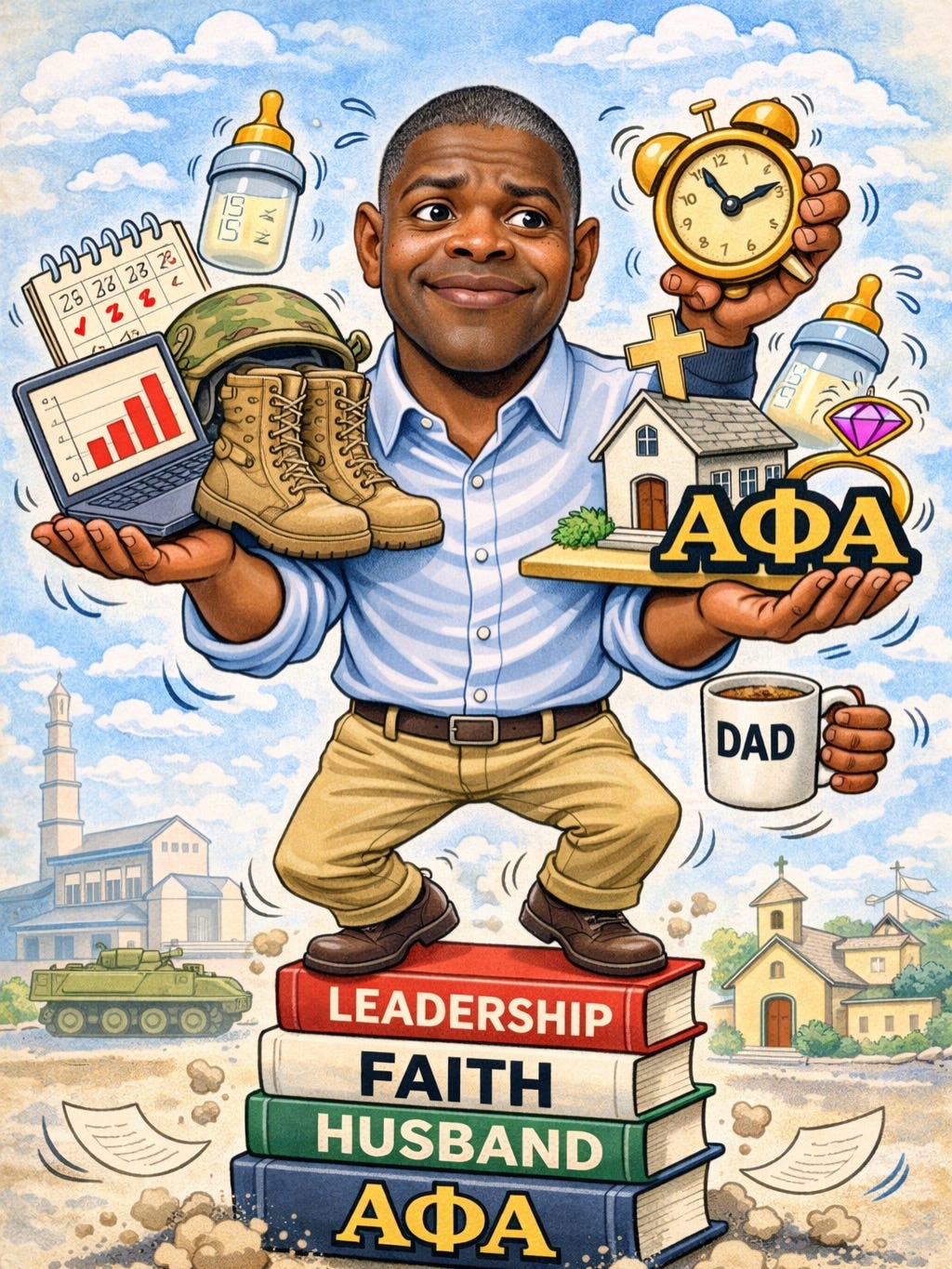
You’ve built trust. You’ve established consistency. Now you must deliver, even when life doesn’t go according to plan.
And it won’t.
Scripture reminds us that “all have sinned and fall short of the glory of God.” We all have moments where we miss the mark. The question isn’t if you’ll fall short, it’s: Who do you become when you do?
What version of you shows up when the plan breaks? What tone do you set in your home when things go wrong? What temperature do you create in moments of stress?
Because your family doesn’t just experience your routine, they experience your response.
Consistency, discipline, and grace are the currencies that sustain a healthy routine.
Consistency builds trust
Discipline sustains performance
Grace repairs what inevitably break
Without grace, routine becomes pressure. Without discipline, it becomes chaos. And without consistency, it becomes meaningless.
In the Army, we don’t just call it routine, we call it a battle rhythm. In garrison, a strong battle rhythm brings order and predictability. It aligns teams, clarifies expectations, and keeps operations running smoothly.
However, in combat, we must disrupt the rhythm. If you stay predictable, you become vulnerable.
So you adapt. You adjust. You change tempo to stay effective in a dynamic environment.
Life requires that same awareness.
Not every season of life is the same. Some seasons are peacetime, where consistency and structure are exactly what your family needs. Other seasons are war, where flexibility, resilience, and adaptation become essential.
The mistake many of us make is trying to apply the same routine to every season.
But strong leaders at home and in uniform must understand this: You don’t abandon routine. You adapt your battle rhythm.
With that, I find that routine is a gift but it’s also a responsibility. It creates peace, but it also creates expectation. So the real question isn’t just whether you have a routine…
It’s this: Do you have the awareness to adjust it when life demands it and the character to lead well when it breaks?
Because in the end, your family, your Soldiers, or your team won’t remember your perfect routine. They’ll remember how you showed up when it wasn’t.

This really hit. The connection between routine and leadership, both at home and in service, is powerful. I enjoyed how you framed routine not just as structure, but as a responsibility that builds trust and stability for the people counting on you.
What stood out most was the reminder that it’s not the routine itself, but how we respond when it breaks. That balance of consistency, discipline, and especially grace is something a lot of people overlook. The “battle rhythm” analogy is spot on too- knowing when to hold structure and when to adapt is what separates good leaders from great ones.
Really thoughtful perspective. Thanks for sharing this, brother. Onward and upward toward the light.. '06
Spencer, thank you for the comments. Routine is a delicate balance that all of us are striving to find what works best for us! Onwards and upwards!